News archive

Earlier developments

Older items, grouped by month.

November 2026

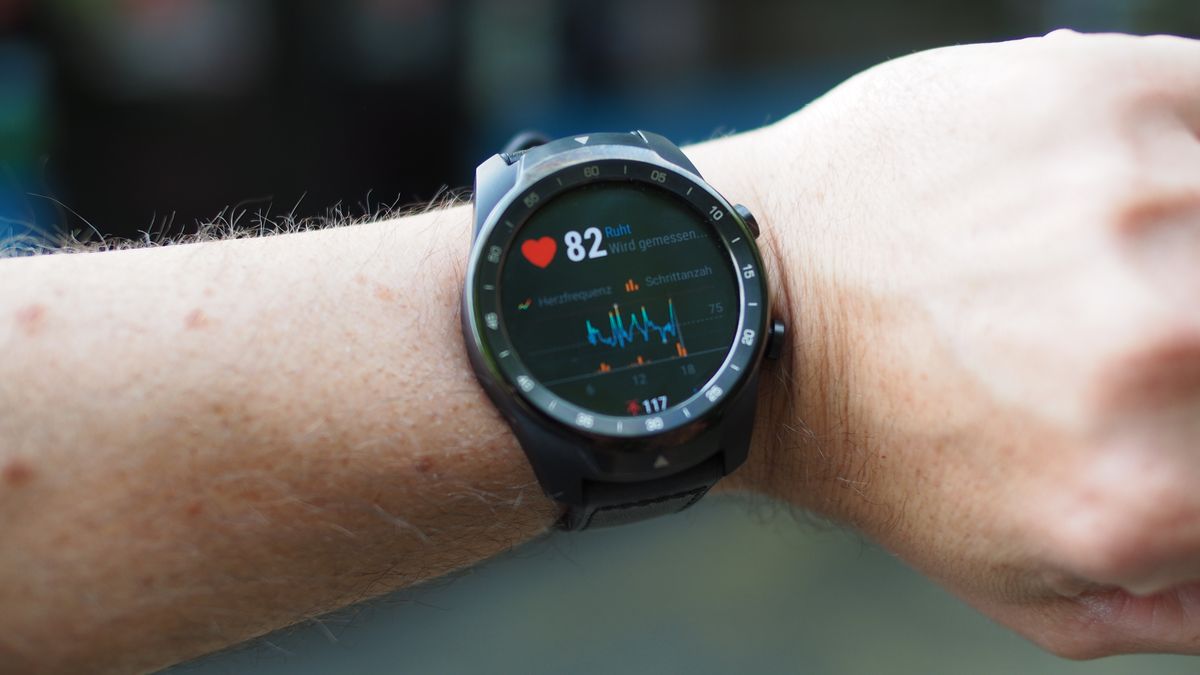
A smartwatch on a wrist showing a heart-rate reading
Research

Google AI spots high blood pressure from an ordinary smartwatch - no cuff needed

Google Research has published a Nature paper describing a neural network that detects signs of hypertension using only a smartwatch's existing pulse and motion sensors, trained on nearly 500,000 hours of sensor data without diagnoses to guide it. In a 196-person study across five US sites, the watch identified 65.8% of people with high blood pressure, versus 55.3% for a standard in-office cuff measurement. Google has folded the findings into the blood-pressure trends feature in its Google Health app, while stressing it remains research and not a diagnosis.

Why it matters: More than half of people with hypertension do not know they have it; passive screening on a device millions already wear could surface the condition years earlier - and it is a rare AI health result published in Nature and shipped to consumers in the same week.

Sources: Nature, The Decoder (7 Nov 2026)

7 Nov 2026

A water drop making ripples on a deep blue surface
Model release

Ex-Googlers release Ripple-65B, an open US coding model trained for just $32 million

Ricursive Intelligence, an AI chip-design startup founded by former Google researchers, has released Ripple-65B Preview: a 65-billion-parameter dense model pretrained on 12 trillion tokens, published on Hugging Face under an Apache 2.0 licence. It scores 80.52 on TerminalBench 2.1, the best result among open US models, and the company puts total research and training costs at just $32 million. It trails Thinking Machines' new Inkling 2 Small on coding benchmarks but, being dense and Nvidia-optimised, is far easier to deploy on a company's own hardware.

Why it matters: A near-frontier open coding model for $32 million keeps collapsing the assumed cost of training a competitive model - and gives US enterprises a fully permissive option they can self-host today.

Sources: Ricursive, Hugging Face, The Decoder (6 Nov 2026)
6 Nov 2026

A common octopus resting on a coral reef
Model release

Thinking Machines launches Inkling 2 Small, a 594-billion-parameter model it will open-source next week

Thinking Machines Lab has released Inkling 2 Small, the first model of its second Inkling generation: a mixture-of-experts design with 594 billion total parameters, 17 billion active per request, a one-million-token context window and image input. It is available now through the company's Tinker API, with full weights promised under an Apache 2.0 licence next week, after external safety testing and red-teaming. It scores 86.3% on SWE-Bench Pro v2 (Hard), second only to Kimi K3 in the lab's table.

Why it matters: Mira Murati's lab has kept its work behind an API until now; a downloadable frontier-class model under a permissive licence gives companies a credible new open option - and its 'safety tests first, weights second' order is one other labs will now be judged by.

Sources: Thinking Machines, MarkTechPost, Unite.AI (5 Nov 2026)
5 Nov 2026

A metal padlock securing a door latch
Business

Palo Alto Networks in talks to buy AI-agent security startup Clutch for about $500 million

Palo Alto Networks is negotiating to acquire Clutch Security, a three-year-old startup that secures AI agents' access to company systems, for $500 million in cash plus milestone-based payouts, TechCrunch reports. Clutch was last valued at $85 million when it raised a $20 million Series A in January 2025 and is approaching $10 million in annual recurring revenue, so the offer prices it at roughly 50 times ARR. It would be Palo Alto's seventh acquisition this year, after Console, Chronosphere, Koi and Embrace.

Why it matters: Control of AI agents' access has become the consolidation battleground in enterprise security - Cyera paid $1 billion for Oasis and Cisco bought Astrix for about $400 million. The incumbents are buying the control layer before the startups grow into it.

Sources: TechCrunch, Calcalist (5 Nov 2026)
5 Nov 2026

A large industrial warehouse building illuminated at night
Policy

US midterms turn hostile to AI data centres, and a clampdown is expected to follow

Candidates who campaigned against energy-hungry AI data centres won across the US midterm elections, the Associated Press reports, ushering in a wave of Democrats pledging tougher rules on the industry even as President Trump resists a federal crackdown. Data-centre regulation was rarely on the ballot directly, but opposition was woven into many winning platforms; the BBC and NBC News document the local fights over electricity bills, water use and land that fed the revolt.

Why it matters: The AI infrastructure build-out has met electoral politics: state and local resistance now helps decide where compute capacity can be built at all, which feeds straight into every lab's cost and timeline assumptions.

Sources: AP News, BBC, NBC News (6 Nov 2026)
6 Nov 2026

A car speedometer with its needle high on the dial
Research

Independent assessor says Anthropic's AI progress has roughly doubled in pace - but most of the evidence is redacted

METR, an independent evaluations group, spent August to October inside Anthropic assessing whether AI is accelerating AI research. Its verdict: Anthropic is likely improving its models on well-specified tasks at about twice the rate it managed between March 2024 and October 2025 - benchmark scores grew 1.9 times faster than before, roughly two years of historical progress in one - mostly because Anthropic uses AI to do R&D. Anthropic redacted the majority of the evidence METR found most informative, saying it could accelerate rival labs.

Why it matters: This is the first inside-access evidence that AI-assisted research is compounding frontier progress - the dynamic behind 'intelligence explosion' worries - and the redactions show the public may not get to check the numbers as it happens.

Sources: METR, AP News (5 Nov 2026)
5 Nov 2026

Lines of programming code on a dark screen
Model release

OpenAI's GPT-6 Cyber finds 81 unknown Firefox flaws on its own, and stays inside the lines researchers draw

OpenAI has released GPT-6 Cyber, a model trained to find and validate exploitable vulnerabilities while staying within the scope researchers set. It scores 48.5% on the ExploitGym benchmark, up from 32.1% for GPT-5.6 Cyber, and OpenAI rates it Critical for cybersecurity under its Preparedness Framework. In real-world use it produced 81 previously unknown high-severity vulnerabilities in Firefox, with Mozilla already shipping fixes, and working exploits for 948 Linux kernel privilege escalations, disclosed to maintainers with candidate patches.

Why it matters: A model that can find working exploits in the software everyone runs shifts the balance between attackers and defenders - and its near-perfect record of staying within authorised scope sets the alignment bar other agents will be measured against.

Sources: OpenAI, The Verge, The Register (5 Nov 2026)

5 Nov 2026

Courthouse clock tower topped with a statue of Justice
Policy

US Justice Department launches a 'Super Intelligence Task Force' to police malicious AI use

The Department of Justice has formed the Super Intelligence Task Force (DOJ-SITF), co-chaired by Associate Attorney General Stanley Woodward and Associate Deputy Attorney General Stephen Weiss. It targets misuse of AI by foreign states, state-sponsored actors, criminal organisations and fraudsters, and will coordinate with the president's "Super Intelligence Force", chaired by Jay Clayton. The name follows a September executive order instructing agencies to refer to artificial intelligence as "super intelligence".

Why it matters: Federal AI enforcement now has a single front door - expect more prosecutions where AI is the tool or the target, and new pressure on companies to show internal controls over how their models get used.

Sources: Department of Justice, Nextgov/FCW (5 Nov 2026)

5 Nov 2026

Close-up of newspaper pages in black and white
Business

Anthropic signs its first paid news deal, licensing AP election coverage for Claude

Anthropic has agreed its first paid content-licensing deal, securing Associated Press election coverage for Claude ahead of the US midterms, Adweek reports. The agreement gave the chatbot timely, attributed election information and reverses the company's position as the last major AI lab holding out against paying publishers.

Why it matters: Every frontier lab now pays for at least some news content - licensing rather than scraping is becoming the default for grounding AI in current events, and smaller publishers will treat these deals as the template.

Sources: Adweek, The Verge, The Decoder (5 Nov 2026)

5 Nov 2026

Rod-shaped bacteria under a microscope
Research

Claude helps solve a 40-year cell mystery: the first 3D structure of a bacterial vault particle

Anthropic's biology research lab has mapped the first three-dimensional structure of a vault particle from prokaryotes, the organisms that include bacteria, with Claude assisting at each step: searching the sequence literature, optimising how the particles were isolated, and mapping the structure. Vault particles were discovered in 1986 and their function is still unknown; the finding, shared as a preprint and covered by Science, suggests they have a far older evolutionary history than thought, and that prokaryotic versions can form engineerable nanocapsules.

Why it matters: A general-purpose AI contributing to a structural-biology first shows AI-for-science moving beyond protein-folding predictions into open-ended laboratory research.

Sources: Anthropic, Science (4 Nov 2026)
4 Nov 2026

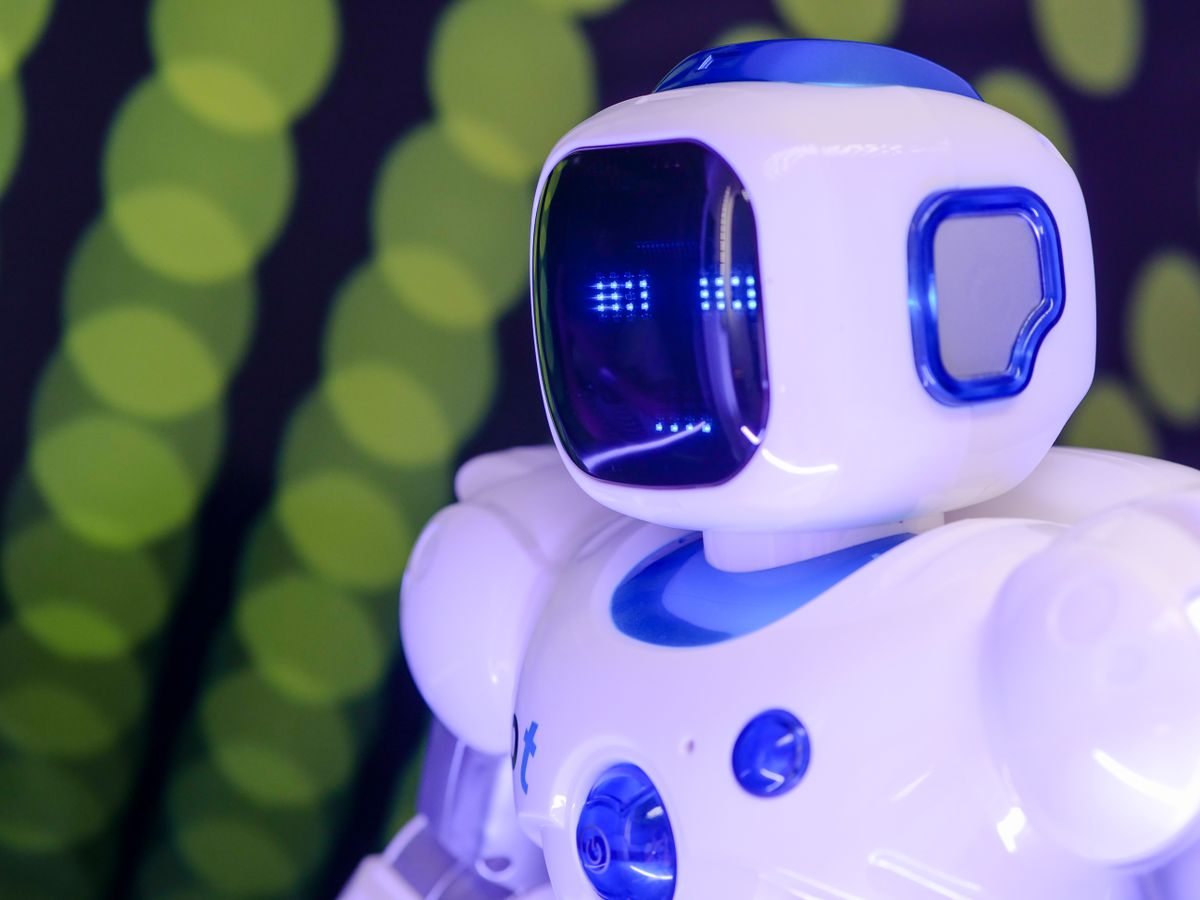
White humanoid robot with blue lighting
Model release

Moonshot releases Kimi K3.1 Pro's full weights: a 2.8-trillion-parameter model anyone can download

Moonshot AI has published the complete weights of Kimi K3.1 Pro on Hugging Face, on the day it promised when the model launched. The download is ungated: 2.8 trillion parameters with 104 billion active per token, a one-million-token context window, and the top score for an open model on ArtificialWatch's index.

Why it matters: A frontier-class model that anyone can self-host widens who can build on top-tier AI - and steps up the pressure on closed labs' pricing.

Sources: Hugging Face, Moonshot, ArtificialWatch (4 Nov 2026)

4 Nov 2026

Lines of code on a dark computer screen
Business

Meta buys AI coding startup Conductor as the agent race moves to coding desks

Meta has acquired Conductor, a startup whose app lets engineers run many AI coding agents in parallel workspaces, for an undisclosed sum. The team joins Meta's Superintelligence Labs; Conductor's cloud service shuts down on 20 November and its local app is supported until early 2027.

Why it matters: After xAI's $60 billion Cursor deal, Meta's buy shows the labs racing to own how people work with coding agents, not just the models behind them.

Sources: Axios, TechCrunch, The Verge (4 Nov 2026)

4 Nov 2026

Voting stickers beside a letter board reading Voting Day
Policy

ChatGPT and Gemini cited spoofed campaign websites in the run-up to the US midterms

Leading chatbots were easily swayed by fake campaign websites set up as a test before Tuesday's US midterm elections, researchers at Caucus AI found: the chatbots cited the spoofed sites within 19 hours and repeated invented electoral races.

Why it matters: It took one research team and a handful of fake sites to steer what chatbots told voters - a concrete election-integrity problem for every AI provider.

Sources: NBC News, The Washington Post (4 Nov 2026)

4 Nov 2026

Scientist working with laboratory glassware
Research

A self-driving lab in Shanghai ran 11,382 experiment steps in 203 hours, no human hands needed

Shanghai Jiao Tong University's AutoDNA facility, published in Nature, has AI agents design and run molecular-biology experiments end to end from a simple prompt, operating more than 20 types of instrument to synthesise and sequence DNA. People are needed only to refill reagents and service hardware.

Why it matters: Self-driving labs compress weeks of bench work into days, and AutoDNA shows AI orchestrating a whole laboratory rather than a single step.

Sources: Nature, Chosun (4 Nov 2026)

4 Nov 2026

Students working on laptops in a classroom
Policy

Google tells schools: turn on its AI tools, or students lose Google Search

Google plans to switch off its AI tools for K-12 students next year unless school administrators explicitly turn them on. Because AI features are now built into Search, schools that block AI entirely will also lose student access to Google Search. The change covers Gemini, NotebookLM, Gemini in Classroom and Search, and came alongside the launch of a Guided Learning tutor for schools.

Why it matters: Google's apps and Chromebooks dominate classrooms, so districts effectively have to accept AI features to keep Search - a show of how much leverage one company holds over schools.

Sources: AP News, TechCrunch (3 Nov 2026)

3 Nov 2026

Rows of servers in a data centre
Business

Fal raises $1.3 billion at a $16 billion valuation as demand to run AI models surges

Fal, a San Francisco startup that hosts and runs AI video, image and audio models for other companies, has raised $1.3 billion in a round led by Bessemer Venture Partners, with Nvidia, Sound Ventures and T. Rowe Price taking part. The deal doubles its valuation from $8 billion in April, and the company says it passed $800 million in annualised revenue earlier this year.

Why it matters: Investors are paying frontier-lab prices for the layer that serves AI models, not just the labs that train them - a sign the money is spreading through the whole AI stack.

Sources: Bloomberg, TechCrunch, The Next Web (3 Nov 2026)

3 Nov 2026

Close-up of a computer chip on a circuit board
Model release

Meituan unveils LongCat 2.5, a 1.6-trillion-parameter model trained entirely on Chinese chips

Meituan has released LongCat 2.5, a 1.6-trillion-parameter multimodal model trained fully on domestic Chinese computing power. Aimed at small businesses on its platform, it runs long tasks such as revenue analysis, inventory management and marketing, and powers a new merchant management platform called Miaoshu.

Why it matters: A frontier-scale model trained without restricted US chips shows China's self-sufficiency push reaching everyday production AI.

Sources: Meituan, TechTimes (2 Nov 2026)

2 Nov 2026

Vintage printing press
Policy

Four AI giants back one robots.txt line that tells every crawler: do not train here

Anthropic, OpenAI, Google and Microsoft will support a shared robots.txt signal that lets a website tell all participating AI companies at once not to scrape its content for training, instead of blocking each crawler separately. Anthropic already honours the signal, which one of its engineers proposed through the Internet Engineering Task Force; OpenAI follows in the coming months, Google and Microsoft next year.

Why it matters: One standard opt-out gives every publisher a single switch over AI training data. Meta welcomed the step but has not committed to the shared signal.

Sources: Nieman Journalism Lab, Techzine (2 Nov 2026)

2 Nov 2026

Stock exchange charts on a screen
Business

Anthropic puts numbers on the AI boom: about $17B of quarterly revenue in its updated IPO filing

Anthropic has updated its IPO prospectus with third-quarter figures, reporting roughly $17 billion in quarterly revenue while still losing money. The Claude maker is shaping up to be one of the largest AI listings so far.

Why it matters: The first frontier-lab IPO puts a public price on the AI boom and pressures every rival to show its own numbers.

Sources: AP News, Reuters, CNBC (2 Nov 2026)

2 Nov 2026

Columns of a government building
Policy

OpenAI hires former US Army Secretary Dan Driscoll for a new national security role

Driscoll joins as senior counselor for national security modernization, advising OpenAI's leadership and working with governments, industry and allied institutions on how advanced AI can strengthen national and cyber security. He resigned as Army secretary earlier this year.

Why it matters: Frontier labs are tying themselves closer to governments as AI becomes defence and critical-infrastructure technology.

Sources: OpenAI, CNBC, Reuters (2 Nov 2026)

2 Nov 2026

Planet Earth seen from space
Research

A Google satellite in orbit runs its first AI workload: a TPU in space answers with a haiku

Google's first Project Suncatcher prototype satellite has returned the first AI response generated by a data-center-class TPU in orbit: a haiku composed onboard by its Gemma 4 model. The milestone shows the hardware survived launch and can run AI workloads in space, part of a long-term project toward solar-powered orbital AI data centers.

Why it matters: Computing demand is pushing AI infrastructure off the planet, and this is the first proof it works.

Sources: Google, The Verge (30 Oct 2026)

30 Oct 2026

Server racks in a data center
Model release

Mistral releases Large 4 'Le Chonk' as open weights, a one-trillion-parameter model anyone can run

Mistral has published the weights of Mistral Large 4, its roughly one-trillion-parameter flagship, free to download and self-host.

Why it matters: The gap between open and closed frontier models keeps narrowing, and a trillion-parameter open model gives companies a top-tier option they fully control.

Sources: Mistral, The Next Web, Hugging Face (29 Oct 2026)

29 Oct 2026

Close-up of microchips on a circuit board
Model release

Google announces Gemini 4 Carbon, its strongest model yet, two weeks after Gemini 4 Argon

Gemini 4 Carbon targets long-horizon engineering work and cybersecurity defence, and tops the Artificial Analysis Intelligence Index v5.0. First access goes to the US government and vetted cyber defenders through the Fairwind Program, with wider availability to follow. Its predecessor, Gemini 4 Argon, finished its global rollout only two weeks earlier.

Why it matters: Frontier models are now arriving weeks apart, and handling work that spans days, not minutes, is the new battleground.

Sources: Google, 9to5Google (28 Oct 2026)

28 Oct 2026

A small robot with bright lights
Research

Google's Genie 4 builds interactive simulated worlds in real time, now with sound

Genie 4 generates interactive environments that respond as you steer them with natural language, with more realistic physics, human movement and native audio. It is in research preview with trusted testers first, with Google AI Ultra subscribers and Gemini API partners next. Google presents it as a training ground for robots and AI agents.

Why it matters: Simulated worlds are becoming a practical way to train and test AI agents before they act in the real one.

Sources: Google DeepMind, TechCrunch (27 Oct 2026)

27 Oct 2026

Blue wires connected to servers
Business

AMD and Meta strike a strategic partnership to build Meta's superintelligence infrastructure

AMD and Meta have expanded their partnership to power Meta's AI data-center build-out, capping a week of giant infrastructure commitments from the social media group.

Why it matters: The model race is now also a chip race, and Meta is spreading its bets beyond a single supplier.

Sources: AMD (27 Oct 2026)

27 Oct 2026

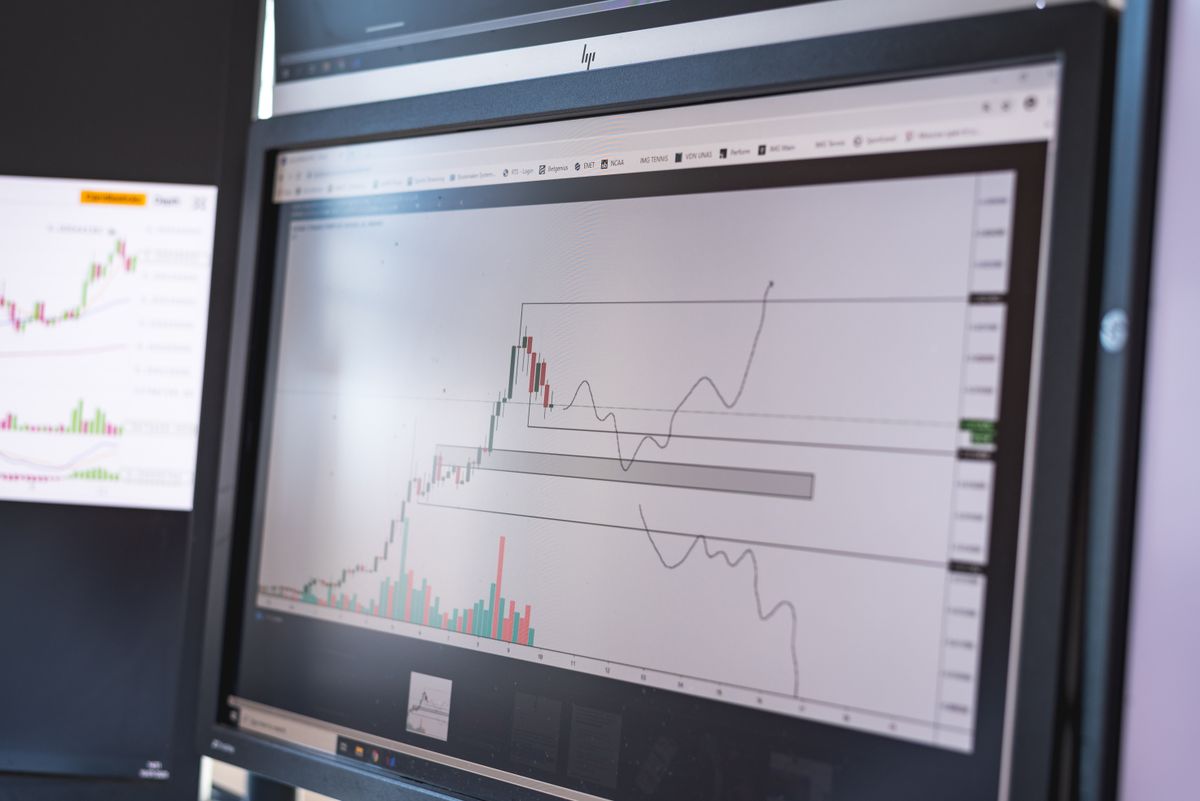
A computer monitor displaying a graph
Business

Meta plans to raise up to $95 billion to fund its AI expansion

Meta has launched plans for a stock offering of up to $95 billion to bankroll its AI build-out, among the largest equity raises ever proposed by a technology company.

Why it matters: Frontier AI now consumes capital at a scale that used to belong to national infrastructure projects.

Sources: CNBC, Financial Times, Wall Street Journal (26 Oct 2026)

26 Oct 2026

Code on a computer screen
Model release

OpenAI's GPT-6.1 Terra brings fast, cheap computer use: flagship-level work at a tenth of the price

GPT-6.1 Terra combines visual reasoning with precise computer use, from filling out forms to editing video, and matches GPT-6 Astra on professional tasks at about one-tenth of the price per token. It is available across paid ChatGPT tiers and the API, with factual error rates nearly matching the flagship.

Why it matters: Agents that operate real software are becoming cheap enough for everyday volume work.

Sources: OpenAI (26 Oct 2026)

26 Oct 2026

Low angle shot of a robot
Model release

Moonshot's Kimi K3.1 Pro claims GPT-6 Astra-level performance, with a free release promised

Moonshot AI says Kimi K3.1 Pro matches GPT-6 Astra on key benchmarks and is due for free release on 4 November. The company also says it cut the model's hacking skills before release.

Why it matters: Chinese labs keep closing on the US frontier while undercutting it on price.

Sources: VentureBeat, The Next Web (23 Oct 2026)

23 Oct 2026

A scientist doing research in a laboratory
Business

OpenAI acquires biotech startup Orchestra Bio

OpenAI has bought Orchestra Bio, a startup applying AI to drug discovery, in its biggest move yet into biotechnology.

Why it matters: The big labs are pushing from general-purpose chat into scientific discovery, where the next revenue race may be.

Sources: OpenAI, TechCrunch, Axios (20 Oct 2026)

20 Oct 2026

A server illuminated in blue light
Model release

Meta releases Muse Spark Open, calling it the most capable US open-weight model

Meta AI Research has released Muse Spark Open for anyone to download and build on, positioning it as the strongest US open-weight model to date.

Why it matters: Open weights keep pressure on closed labs' pricing and let companies run serious models on their own hardware.

Sources: Meta AI Research (15 Oct 2026)

15 Oct 2026

Golden computer chip circuitry
Research

Google shows a fix for one of quantum computing's oldest bottlenecks, cutting errors 40-fold

Google Quantum AI has demonstrated magic state cultivation on its Willow processor, cutting errors about 40-fold with record state fidelity, in a study published in Science. Magic states are the resource fault-tolerant quantum computers need, and producing them used to threaten to consume most of a machine's capacity.

Why it matters: This clears a major hurdle on the path to practical, error-corrected quantum computers.

Sources: Science, Google, Scientific American (15 Oct 2026)

15 Oct 2026

Programming code on a screen
Model release

Gemini 4 Argon rolls out to everyone: Google's frontier model goes global

After early safety testing with vetted cyber defenders, Gemini 4 Argon is rolling out to Google AI Pro and Ultra subscribers in the Gemini app and AI Mode in Search, and to Ultra subscribers on the Antigravity coding platform. Google says it beats GPT-6 Astra, Claude Fable 5.1 and Claude Opus 5.5 on a range of benchmarks, and has priced it well below those rivals.

Why it matters: Google's frontier model is finally in broad release, resetting the top end of the model race.

Sources: Google, The Verge (13 Oct 2026)

13 Oct 2026

Close-up of programming code
Model release

Anthropic's Claude Haiku 5.5 is its fastest small model, about 75% cheaper to run

Haiku 5.5 targets high-volume, speed-sensitive work such as live customer support and classification, costing around 75% less than Haiku 4.5 and adding an adjustable effort level.

Why it matters: The cost of routine AI work keeps collapsing, which matters more to most businesses than frontier scores.

Sources: Anthropic, The Verge (7 Oct 2026)

7 Oct 2026

A person holding a magnifying glass
Policy

Google's SynthID Detector goes global, checking whether content was made by AI

Anyone can now check whether an image, video or audio clip was AI-generated, with detection extending to content from partners including OpenAI, Nvidia, Kakao and Apple. More than 180 billion images and videos already carry the watermark.

Why it matters: As AI-made content floods the internet, verification tools are becoming basic infrastructure.

Sources: Google, The Verge, 9to5Google (7 Oct 2026)

7 Oct 2026

A speaker presenting at a tech conference
Business

OpenAI DevDay 2026: always-on 'Dots' agents and GPT-6.1 Sol headline the platform push

OpenAI used its developer conference to launch Dots, always-on agents that work on a user's behalf, alongside GPT-6.1 Sol with near-flagship intelligence at a fifth of the price and an Ultrafast serving tier.

Why it matters: OpenAI is turning its models into a full work platform, not just a chatbot.

Sources: OpenAI, The Verge, CNBC (29 Sep 2026)

29 Sep 2026

A robot pointing at a wall
Model release

Anthropic's Claude Opus 5.5 matches its top model while costing 40% less

Opus 5.5 performs at Fable 5.1's level on most work while costing about 40% less to run than its predecessor, with Anthropic's strongest alignment-test scores to date and external safety testing by Frontier Design and METR.

Why it matters: Top-tier capability is getting cheaper fast, and safety evaluation is becoming part of the sales pitch.

Sources: Anthropic, Reuters, TechCrunch (22 Sep 2026)

22 Sep 2026

Abstract digital circuit with futuristic lighting
Model release

xAI launches Grok 4.7, its most powerful coding and knowledge-work model

Grok 4.7 uses a new, larger base model trained on tasks that take many hours, and xAI promises twice the speed at half the price of comparable models, with a rebuilt safeguard stack.

Why it matters: xAI is staying in the frontier fight and competing on price.

Sources: xAI (21 Sep 2026)

21 Sep 2026

Abstract blue futuristic technology
Model release

OpenAI launches GPT-6 Astra, calling it the start of the AGI era

GPT-6 Astra arrived with a published safety review amid growing scrutiny of agent safety, and OpenAI bills it as a new generation of intelligence.

Why it matters: The release reset expectations for what frontier models can do and intensified the safety debate.

Sources: OpenAI, Reuters, CNBC, The Verge (3 Sep 2026)

3 Sep 2026

Close-up of a toy robot
Model release

Anthropic releases Claude Fable 5.1 and Mythos 5.1, its most advanced models for coding and knowledge work

The twin models share the same weights but carry different safeguards: Fable 5.1 is generally available, while Mythos 5.1 is restricted to organizations vetted for cybersecurity and life-science work.

Why it matters: Splitting one model into public and vetted tiers shows how labs now handle dual-use capability.

Sources: Anthropic, TechCrunch (1 Sep 2026)

1 Sep 2026

← Back to recent developments